Do memory games improve your memory?
Honestly: they improve your memory for that game. Play a pairs game every day and you will get faster at pairs games. The harder question is whether that practice makes you better at remembering names, shopping lists or where you left your keys.
Researchers have looked at this closely, because brain-training apps once made big promises. A major review published in 2016 in Psychological Science in the Public Interest (Simons and colleagues) went through the studies behind those claims. It found good evidence that people improve at the tasks they practise, less evidence that this spreads to closely related tasks, and little evidence that it improves everyday thinking.
So we will not tell you a game will sharpen your mind. What memory games do well is give you a short, focused challenge with a clear score — and a place to practise the techniques below, which do work on everyday remembering when you use them there too.
Two kinds of memory, two games
Memory games tend to test one of two things.
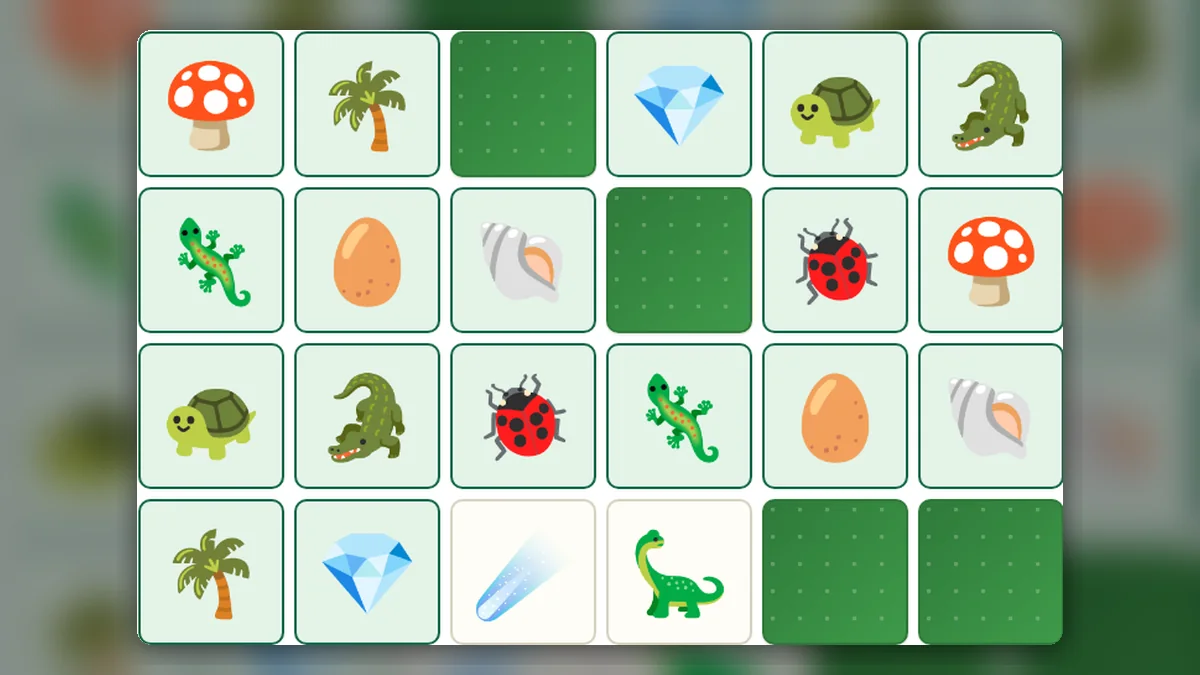
Where things are. Memory Match is the card game many people first played on a kitchen table, also called Pairs or Concentration. Twenty-four cards lie face down — twelve pairs of pictures from a prehistoric world. Turn two; a match stays up, anything else turns back over, and you have to remember where each picture was. This is spatial memory: a picture tied to a place.
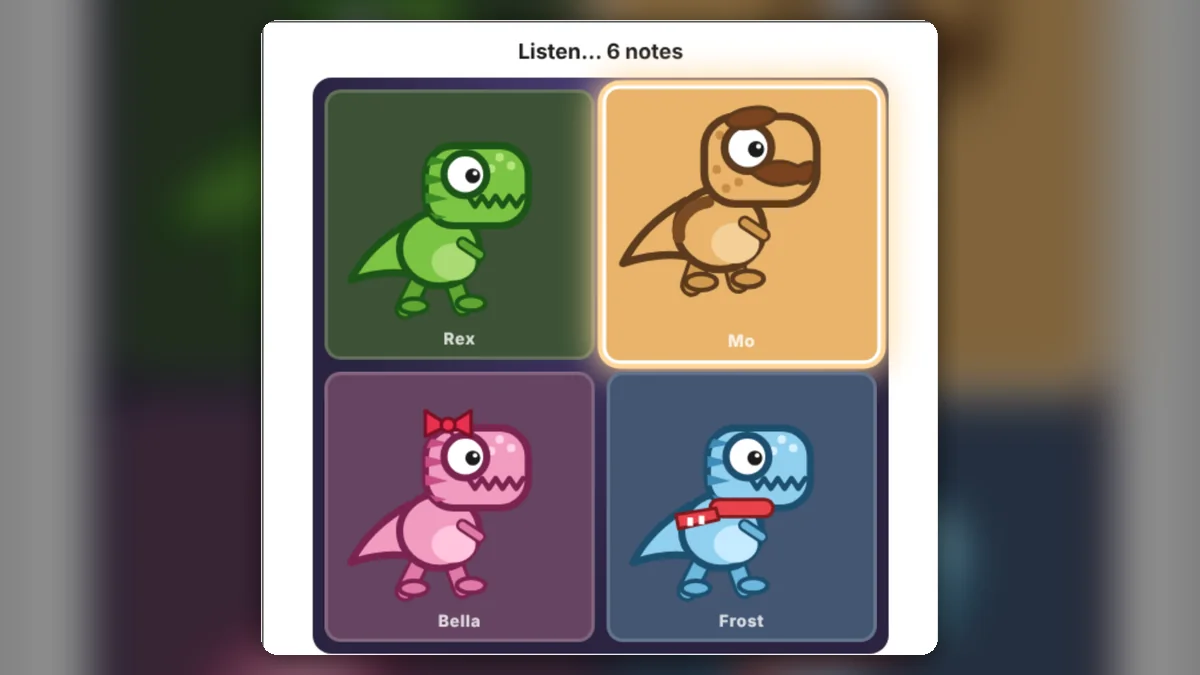
In what order things happened. Dino Chorus is a sequence game. Four dinosaurs each sing their own note; they sing a short song, and you tap it back in the same order. Every time you get it right the song comes again with one more note on the end. This is the memory you use to repeat a phone number or a set of directions: holding a sequence in mind for a few seconds.
Techniques that make you faster
Name what you see
A glance is easy to forget; a word is not. In Memory Match, say the picture and its place to yourself — "volcano, top left". In Dino Chorus, give each singer a name and say the song as it plays: "Rex, Mo, Mo, Frost". Turning what you see into words gives your memory a second hook.
Group it into chunks
Most people can hold only a handful of separate items in mind at once. The way round that limit is chunking: grouping items so that several count as one. Long Dino Chorus songs become manageable as chunks of three or four notes, the way you would remember a phone number as groups rather than ten digits.
Work in a fixed order
In Memory Match, turn new cards row by row rather than at random. You will remember positions in a pattern far better than scattered spots, and you will never waste a turn on a card you have already seen without meaning to.
Use what never changes
In Dino Chorus the song never changes, it only grows. You do not have to relearn it each round — only the one new note at the end. Rehearse the song as it plays, and listen hardest to the last note.
Do not rush
Neither game rewards guessing. In Memory Match the board ranks time, but a wasted turn costs more than a careful one. In Dino Chorus there is no prize for tapping fast: you have up to six seconds between taps, so use them.
How each game is scored
- Memory Match: your time from the deal to the last pair, measured by our server to a hundredth of a second. The number of turns is shown too, so you can see how cleanly you played. Every round is shuffled fresh on the server, and a card's picture is only revealed when you turn it.
- Dino Chorus: the longest song you sang back without a slip. A wrong note, or more than six seconds without a tap, ends the round. Every song is written fresh by our server, one note at a time.
Both have a monthly leaderboard that starts again on the 1st of every month at 00:00 UTC. You can play as a guest straight away; sign in to put your result on the board.
A short routine
If you want to use memory games as a daily habit, keep it short and deliberate: one round of Memory Match using a fixed row-by-row order, then one round of Dino Chorus naming every note. Watch your times and song lengths over a few weeks. You will see the improvement in the games — and you will have practised naming, chunking and ordering, which are worth using everywhere else too.